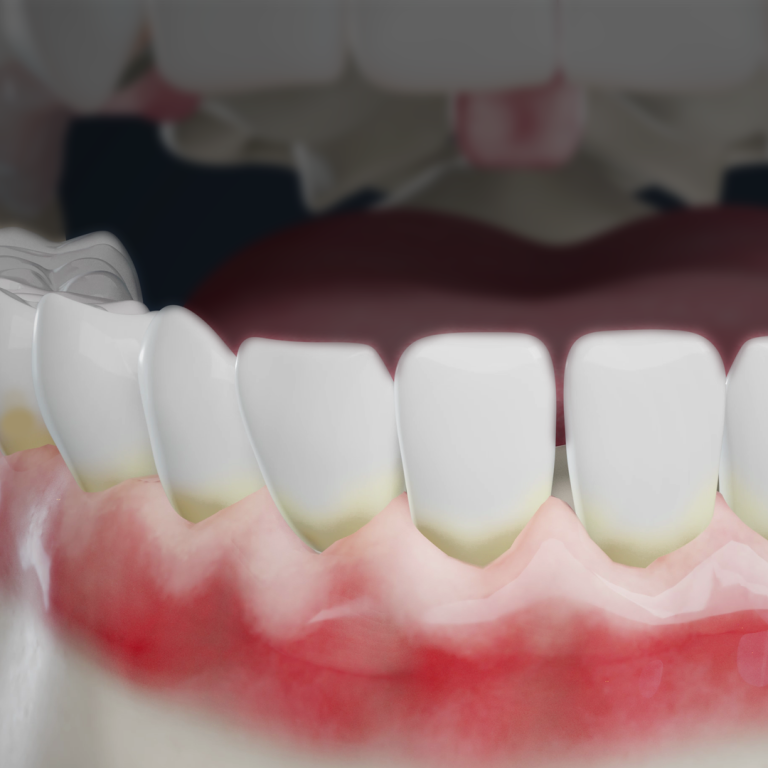
Teeth appear longer when gum recession exposes more of the tooth surface. This usually happens gradually and may be linked to gum disease, aggressive brushing, or teeth grinding.
Gum recession is one of the most common conditions we see in dentistry, and it often develops gradually and without pain. Many patients don’t recognize serious changes until they notice increased tooth sensitivity, change in color at the gumline, or their teeth appear longer than they used to.
The challenge is gum recession doesn’t reverse on its own. If caught early enough, it can remain mild and stable. However, in more serious cases, gum recession can progress to root exposure, bone loss, and even tooth loss if the underlying cause isn’t addressed.
Understanding the early signs of your condition allows you to take proactive steps to stabilize and prevent the worsening of gum recession. Let’s break down how gum recession progresses, how to assess your own gum health, and tips to improve your gum health with the support of your trusted dental team.
Gum recession is not a diagnosis by itself, but a visible indicator that occurs when the gum tissue gradually pulls away from the tooth making teeth appear longer.
What’s important to understand is that healthy gums don’t shrink or move on their own, so gum recession is usually a sign of an underlying issue. In many patients, gum recession is the first visible warning sign that inflammation or bone loss may already be occurring beneath the surface.
Healthy gums are the foundation of a healthy and functional smile.
Think of your gums like a protective seal. Healthy gum tissue forms a barrier around each tooth’s roots to protect underlying bone from bacteria, food debris, and excessive force. When that seal is strong, your teeth are supported, stable, and far less vulnerable to damage.
Exposed roots are significantly more prone to decay, sensitivity, and bone loss that will progress without proper treatment.
When gums begin to recede, it is a sign that stress is being placed on your gums. Understanding the cause or underlying source of this stress is one of the most important steps in preventing further damage. In many cases, recession is not caused by just one factor, but by a combination of habits, inflammation, and individual anatomy.
Treating gum recession without addressing the underlying cause will only lead to continued progression of the condition. Improving your long-term gum health requires identifying what caused the tissue to recede in the first place and creating a plan to prevent it from happening again.
Gum recession is much easier to manage when monitored early. A thorough assessment by your trusted dental team gives you clarity, direction, and confidence about your next steps to improve and maintain good gum health.
An evaluation for gum recession is simple, comfortable, and focused on prevention. The goal isn’t just to look at your gumline, it’s to determine why the gum tissue has moved and whether the regression is stable or progressing. A comprehensive exam will include measurements of the periodontal pockets, x-rays to evaluate potential bone loss, and digital health scans to assess bite and occlusion.
| Stage of Gum Recession | Signs & Symptoms | Proactive Steps You Can Make |
|---|---|---|
| Early-Stage Gum Recession |
|
Speak with your dentist about brushing techniques, gum inflammation, teeth position, and clenching and grinding. |
| Moderate-Stage Gum Recession |
|
Speak with your dentist about evaluating for bone loss and how you can prevent it. |
| Advanced-Stage Gum Recession |
|
Advanced-stage gum recession may indicate periodontal disease, a chronic infection of the mouth. Prompt treatment by your dentist or a periodontist is critical to protect the function of your smile. |
No, once gum tissue has pulled away from a tooth, your body does not regenerate that lost tissue the way it might heal a cut on your skin. When gum tissue recedes, the change is typically permanent unless treated professionally.
Protecting your gums consists of small habits done correctly over time. If you’re beginning to notice the signs and symptoms of early-stage gum recession, be proactive to protect your smile now.
Gum recession is a common dental condition that acts as an important indicator about the health and stability of your smile. While it may start subtly, ignoring the signs of receding gums, such as sensitivity or the appearance of longer teeth, can lead to serious, irreversible consequences. Since gum tissue cannot regenerate on its own, early detection and proactive management are essential for prevention.
If you are noticing any signs of gum recession, your professional dental team can help identify the cause and implement a personalized care plan to protect the foundation of your smile for years to come.