
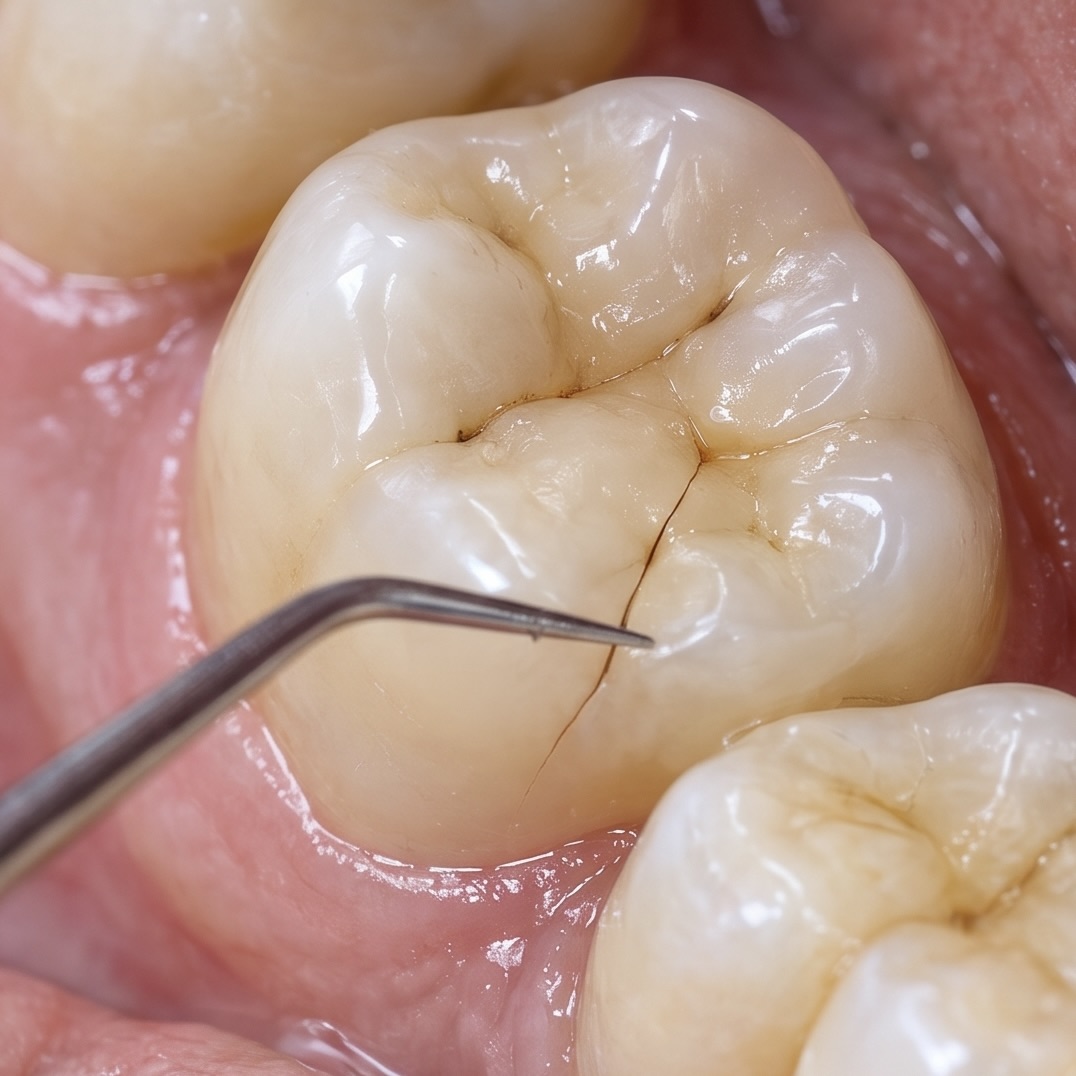
Cracked Tooth With No Pain: What Should I Do?
By Dr. Jonathan Sanderson, DDS
November 5, 2026
Does a cracked tooth always need a root canal?
No. Root canal treatment addresses problems involving the pulp, the living tissue inside the tooth. Whether it is needed depends on the diagnosis, not simply the presence of a crack. The AAE’s cracked-tooth guidance explains the treatment distinctions.
I may recommend a crown for one painless cracked tooth while continuing to watch a crack on another tooth in the same mouth. To a patient, those recommendations can sound contradictory.
The difference is what concerns me about each crack: where it is, how much of the tooth it appears to involve, and what could happen if it extends.
My answer to “Do I really need to fix it if it doesn’t hurt?” is not automatically yes. But I also would not use the absence of pain as the reason to leave it alone.
What Does a Visible Line on a Tooth Mean?
A line on a tooth can mean different things. Superficial enamel lines, called craze lines, are different from cracks that extend into deeper tooth structure. The European Society of Endodontology distinguishes these conditions; craze lines generally do not need treatment except for appearance.
That distinction matters before we even discuss a crown. Seeing a line in the mirror does not tell you which kind you have.
A dental assessment may involve magnification, light directed through the tooth, bite testing, and checking the surrounding gums and the tooth’s response to cold. These are among the assessment methods described by the American Association of Endodontists. The goal is to understand the tooth, not simply confirm that a line is visible.
What Makes a Cracked Tooth More Concerning?
Pain or discomfort when chewing gets my attention. Even without symptoms, though, I become more concerned when I see a crack through the central part of a tooth and believe further extension could threaten our ability to save it.
In my own decision-making, I distinguish that from a crack that appears more limited to a cusp—one of the raised portions of the chewing surface. With some of those teeth, I may judge monitoring to be reasonable, with restoration if a piece later breaks.
That is a case-by-case judgment, not a rule that diagonal cracks are safe and vertical cracks mean tooth loss. The depth and extent of a crack affect the outlook; its visible direction alone does not establish whether a tooth can be saved.
When I recommend treating a painless tooth, I want the patient to understand what specifically worries me about that tooth—not leave with the impression that every crack needs a crown.
When Does a Cracked Tooth Need a Crown?
I explain crown recommendations in two categories. Sometimes we are addressing damage that already exists, such as a large missing cusp or extensive decay. Other times, we are trying to reduce the chance of a more serious problem developing.
For the cracked teeth I recommend crowning before symptoms appear, that second purpose is usually the point.
I use a simple visual in the office: my gloved fist. I ask the patient to imagine that my fist is the tooth and the glove is the crown covering it. It helps explain why covering the tooth can be useful even when nothing hurts.
The analogy has a limit: a crown is a rigid restoration, not a soft glove. Its protective role is to help brace the tooth and limit flexing under chewing forces, consistent with the AAE’s explanation of restorative treatment. Covering a crack is not the same as making it disappear.
I also discuss the time and financial commitment of a crown compared with the possible need to replace a tooth later. That is a discussion of alternatives, not a prediction that an untreated tooth will certainly be lost or that a crown guarantees savings.
Can a Cracked Tooth Be Monitored Without Pain?
There are cracks I am comfortable watching. Sometimes I can show a patient another crack on one of their own teeth that we have already been monitoring. That makes the distinction concrete: I am not recommending treatment simply because the word “crack” appears in the conversation.
Research supports selective monitoring. In a three-year observational study of cracked back teeth, many teeth initially selected for monitoring continued without a treatment recommendation. That does not establish that every painless crack can safely be left untreated indefinitely.
The question I want patients to ask is, “What makes this tooth reasonable to watch, and what would change that recommendation?” That is more useful than making pain the only trigger for another conversation.
What Should I Do If I Notice a New Line or Chip?
If you notice a line that was not there before, or a new chip, call the office and arrange an evaluation rather than waiting for discomfort. Until you are seen, try to avoid chewing on that tooth.
Avoid hard objects such as ice and unpopped popcorn kernels, as the AAE advises. Let the office know if you develop pain when chewing or other new symptoms so the appointment timing can be reassessed.
How Do I Decide Between Monitoring and Treatment?
At Audubon Dental, we can evaluate the tooth and discuss why monitoring or treatment may make sense for you. To arrange a visit, contact us at 719-597-6300. My goal is to explain the difference—not assume that every painless crack needs the same response.